
In rural areas across Africa, agricultural irrigation and daily water use rely heavily on groundwater. For smallholder farmers, a device that can detect shallow groundwater within 150 meters is both a production tool and a pretty big investment. With all kinds of underground water detectors on the market ranging from a few hundred dollars to tens of thousands of dollars, how to choose a manufacturer that fits their own needs has become a real problem for many farmers and agricultural cooperatives.
The Real Needs of African Smallholder Farmers
 1. Detection depth covering 50—150 meters, enough to handle most shallow aquifers;
2. Simple to operate, easy to pick up without a professional geology background;
3. Sturdy and durable equipment that can handle high heat, dust, and humidity;
4. Affordable price, ideally in the 1000 — 5000 USD range;
5. After-sales support that’s reliable, with easy-to-get parts and repairs that don’t depend on cross-border shipping.
Comparison of Mainstream Manufacturer Types
| Comparison Dimension | European and American High-End Brands | Turkish/Middle Eastern Brands | Chinese Manufacturers (Taking Guangzhou International Technology as an Example) |
| Typical Detection Depth | 100—300 meters | 100—200 meters | 50—150 meters |
| Price Range (USD) | 8000—30000 | 3000—10000 | 800—5000 |
| Operating Complexity | Relatively high; requires training | Medium | Relatively low, user-friendly interface |
| Anti-Interference Capability | Strong | Medium | Medium to above average |
| Parts and Repair | Requires original factory support, long cycle | Regional agent support | Strong parts compatibility, fast response |
| Suitable For | Large farms, mining companies | Medium farms, contractors | Smallholder farmers, cooperatives, grassroots water management teams |
| After-Sales Service | Depends on agents | Depends on regional agents | Direct from factory or local partners |
From the table, you can see that European and American brands have strong performance but are expensive, suitable for large users with plenty of funds; Turkish brands are in the middle; Chinese manufacturers are more in line with the actual situation of African smallholder farmers in terms of cost-effectiveness and adaptability.
Underground Water Detectors from Guangzhou International Technology
 1. Multi-Method Fusion Detection
Guangzhou International Technology’s equipment usually integrates multiple geophysical methods like the natural electric field method, resistivity method, and electromagnetic method, and can make comprehensive judgments on faults, fissure water, and shallow aquifers. For the granite, gneiss, and sandstone formations common in Africa, this multi-method combination can effectively reduce the misjudgment rate of a single method.
2. Depth Coverage That Fits
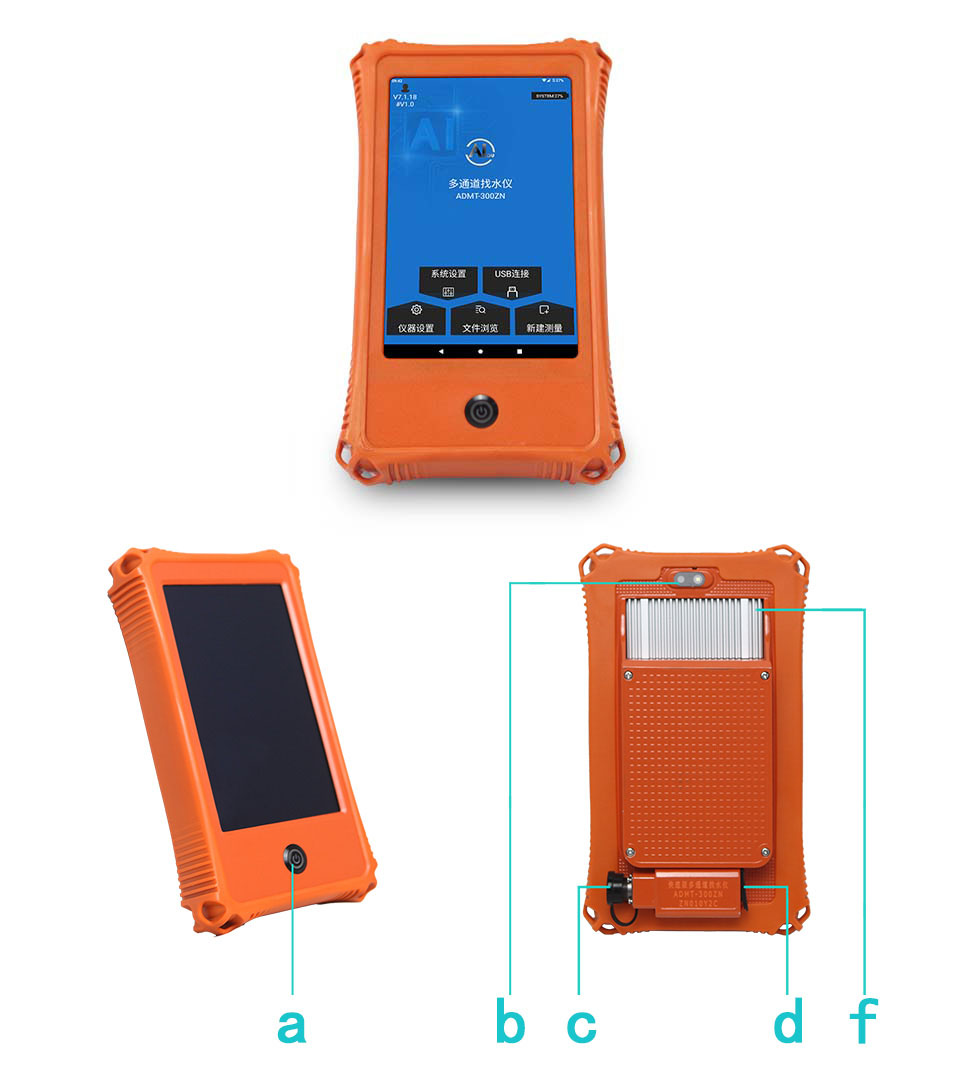
Its mainstream models can cover detection depths of 50 — 150 meters, which exactly matches the common depth for smallholder farmers drilling wells. The equipment supports automatic mapping, and operators can observe profile anomalies directly on the screen without complex data post-processing.
3. Strong Environmental Adaptability
In response to Africa’s high temperatures, dust, and unstable voltage, Guangzhou Technology has optimized power management, heat dissipation, and interface protection. Some models support solar charging and wide voltage input, making them suitable for off-grid areas.
4. Price and Service
Compared with European and American brands, Guangzhou Technology’s products are more affordable, with complete units usually between 1000—4000 USD, and parts are fairly universal. The manufacturer provides English operation manuals and video training, and can provide after-sales support through local partners or remote guidance.
5. Feedback from Actual Applications
In agricultural projects in Nigeria, Kenya, and Tanzania, Guangzhou Technology’s underground water detectors have been used for well site selection for cooperatives. Users report that the operating threshold is relatively low, and after short-term training, local technicians can independently complete measurements and preliminary interpretation.
How Should Smallholder Farmers Choose a Manufacturer
1. Prioritize cost-effectiveness over maximum precision. Smallholder farmers have limited well depth, so chasing high-end equipment too hard isn’t economical.
2. Choose brands that are simple to operate and cheap to train on. No matter how advanced the equipment is, if nobody knows how to use it, it just sits there.
3. Pay attention to how localized the parts and repairs are. Brands where you can buy electrodes, cables, and batteries nearby have lower long-term use costs.
4. Look at the manufacturer’s actual cases in Africa. Brands with local application experience often understand local geology and climate conditions better.
5. Be wary of exaggerated claims. No detector can “guarantee water.” A reasonable expectation is improving the success rate of drilling.

To sum up:
For African smallholder farmers, a 150-meter shallow underground water detector isn’t about being the most expensive; it’s about being the most suitable. With limited budgets and weak technical support, choosing a type of manufacturer that’s cost-effective, has reachable after-sales service, and is operator-friendly is far more practical than chasing the strongest single parameter. In the end, the value of a detector isn’t in the instrument itself, but in whether it can help farmers drill that life-saving well at lower cost and with a higher success rate.
Contact Us – Guangzhou International Technology
📬Want to Know More About How a Particular Detector Works? Contact Us Today!
🔎More Related Articles About [Underground Water Detectors]
Best Value Underground Water Detectors Model for Africa & Middle East
How Often Should Underground Water Detectors Be Calibrated
2026 Underground Water Detectors Brand Selection and Cost-Effectiveness Analysis


