
Doing drilling business in Africa—your water-finding efficiency directly decides whether a project makes money or loses money. In 2026, as African countries ramp up infrastructure investment and demand keeps growing for agricultural irrigation and mine water supply, whoever can pin down well locations faster and keep the dry-hole rate lower will win more orders. Underground water detectors are the core equipment for siting wells—whether you pick the right one often decides your per-well cost and how fast you get paid.
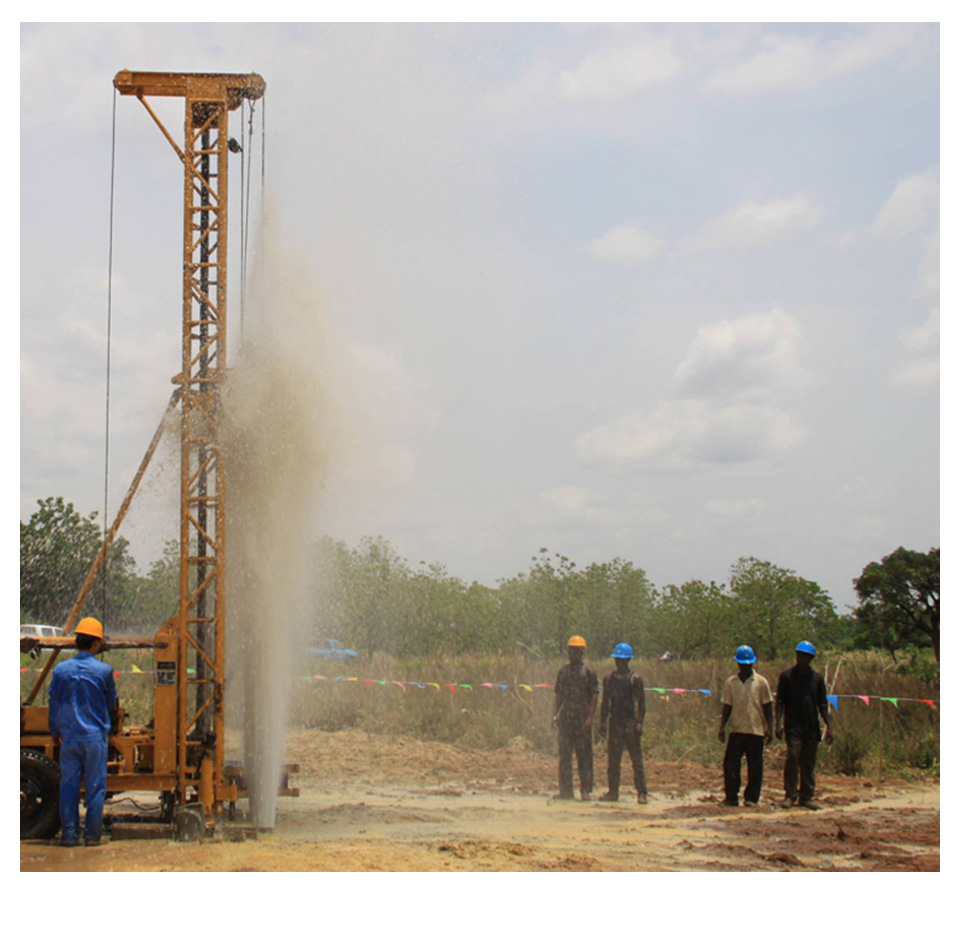
What African Job Sites Demand from Groundwater Detectors
1. Anti-interference and deep penetration: volcanic rock, iron caps, and mineralized zones will seriously mess with electrical signals, so the equipment needs multi-frequency or natural electric field anti-interference algorithms.
2. Environmental adaptability: operating temperature needs to cover 0–50°C, protection rating no lower than IP65, and battery life has to last a full day of field work.
3. Low operating threshold: local assistants in Africa come and go, so the device interface needs to be simple, support multiple languages, and keep training costs low.
4. After-sales and spare parts: whether you can get spare parts and technical support locally or in a neighboring country directly affects downtime losses.
How to Choose Among Mainstream Technical Routes
| Technical route | Applicable geology | Depth capability | Pros | Limitations | Type of boss it suits |
| Natural electric field method (multi-frequency) | Fracture water, structural zones | Medium-deep (about 150–300 m) | Lightweight, high efficiency, no high-power supply needed | Susceptible to electromagnetic interference, needs experienced interpretation | Volume-driven, small and medium drilling crews |
| High-density resistivity method | Layered aquifers, weathered crust | Medium-shallow (about 100–200 m) | Intuitive imaging, high resolution | Time-consuming electrode layout, afraid of hard rock | Those doing precise well siting, taking on government projects |
| Transient electromagnetic method (TEM) | Sand layers, fault zones | Deep (can reach over 300 m) | Sensitive to low-resistivity aquifers, relatively strong anti-interference | Expensive equipment, needs professional training | Large crews, mine water supply |
| Nuclear magnetic resonance method | Directly finds water | Medium-deep | Directly indicates water content | High price, sensitive to magnetic field environment | High-end projects, research cooperation |
Configuration Approach Using Guangzhou International Technology’s Underground Water
Detector as an Example
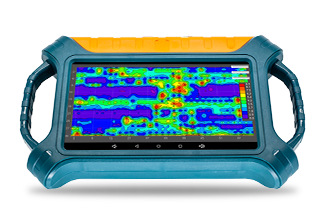 1. Multi-frequency anti-interference: Africa has lots of mineralized zones. If the equipment supports multi-band switching, it can effectively suppress stray currents and mineralization interference, reducing misjudgments.
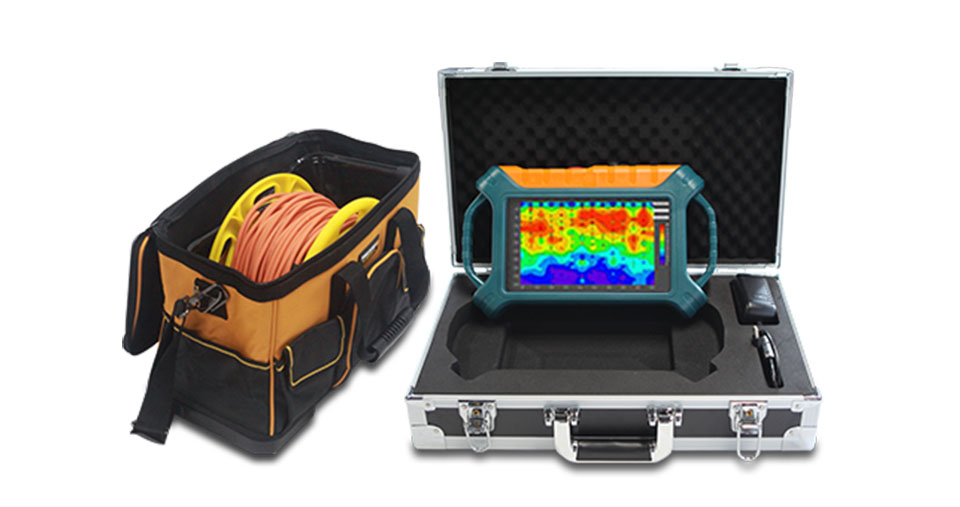
2. Integrated lightweight setup: the main unit and electrodes are highly integrated, so two people can complete one survey line—suitable for scenarios with poor roads where you have to hike in.
3. On-site data mapping: supports quickly producing profile maps on site, so the drilling boss can decide the well location right there and shorten the decision chain.
4. Localized service: confirm whether the manufacturer can provide English/French operation manuals, remote guidance, and spare parts shipping—this is especially important for French-speaking West Africa.
Underground Water Detector Selection Decision Checklist
| Evaluation dimension | Key question | Suggested weight |
| Geological fit | Does it cover the formations you usually drill (volcanic rock/sand layers/fractures) | 25% |
| Detection depth and accuracy | Can it meet the target aquifer depth locally | 20% |
| Environmental tolerance | Is it stable under high temperature, dust, and voltage fluctuations | 15% |
| Operation and training | Can local assistants get up to speed within three days | 15% |
| After-sales and spare parts | Response time, spare parts availability | 15% |
| Price and payback | How soon can a single machine pay for itself by reducing dry holes | 10% |
Pitfall Reminders
1. Don’t just look at the claimed depth: manufacturers’ claimed depths are mostly measured in ideal formations, and the actual effective depth in African hard rock often gets discounted—be sure to demand on-site trial testing.
2. Be wary of the “directly find water” gimmick: apart from nuclear magnetic resonance, most methods are indirect inference, and interpretation experience matters more than equipment specs.
3. Do the payback math: if one machine can cut your dry-hole rate from 30% to 10%, it usually pays for itself in one dry season—that’s more meaningful than just comparing prices.
Conclusion
In the 2026 African drilling market, what you’re competing on is well-siting efficiency and cost control. Only by choosing the right underground water detector can you hold your ground in the competition. Before buying, drilling bosses should do a small-scale trial test first, use real formation data to verify equipment performance, and then decide on bulk configuration.
Contact Us – Guangzhou International Technology
📬Want to Know More About How a Particular Detector Works? Contact Us Today!
🔎More Related Articles About [Underground Water Detectors]
Is It Worth Cooperating with Small Underground Water Detector Manufacturers in 2026
How to Use Underground Water Detectors in Limestone Karst Caves in the Middle East
Real-World Performance of Underground Water Detectors in Middle Eastern Desert Environments


