
Finding underground water in the Middle East’s complex karst terrain is tough. The limestone is riddled with fractures, water-filled caves are unpredictable, and the bone-dry surface creates 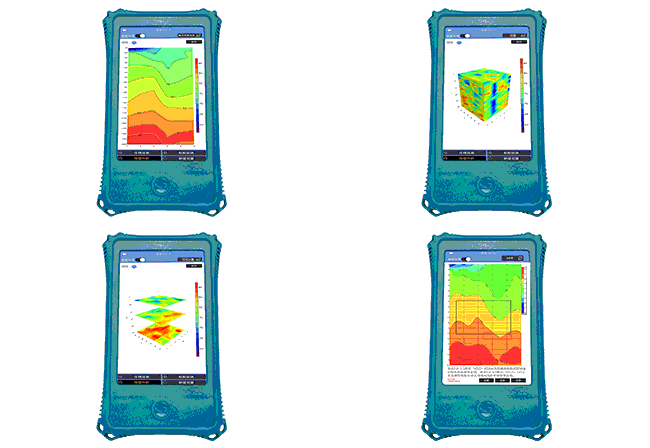 huge contact resistance that throws off standard geophysics gear, leading to false reads. As of 2026, the key to pinpointing water lies in combining the natural electric-field frequency-selection method with multi-channel 3D imaging. This lets you map the electrical boundary between high-resistance bedrock and low-resistance water streams.
The 4-Step Method for Pinpointing Middle Eastern Limestone Caves
1. Set Up a Grid Line:
Run cross-section lines perpendicular to suspected fault lines. Tighten your point spacing down to 1–3 meters so you don’t miss narrow cave fractures.
2. Collect and Clean the Frequency Signal:
Use full-spectrum natural electric field technology to cut through signal loss caused by the desert’s super-high surface resistance.
3. Spot the Difference:
Water-filled caves show up as low resistivity with high-amplitude jumps, while dry or air-filled caves show extremely high resistivity. This makes it easy to tell wet caves from dry ones.
4. Build a 3D Model:
Feed your 2D survey lines into the system to generate a 3D resistivity map, pointing you right to the exact spot and depth to start drilling.
Top Chinese Underground Water Detector Brands & Tech
| Brand | Signature Tech / Feature | Middle East Limestone Cave Advantages | Best Uses |
| Guangzhou International Tech | Multi-channel smart water detector, high-frequency signal anti-interference algorithm | Super sensitive to electrical boundaries between high-resistance limestone and water-bearing streams; thrives in extreme heat and dry ground | Locating desert karst streams, precision drilling for deep water-filled caves |
| Puqi (PQWT) | PQWT-M/TC series smart mapping detector | Auto-generates 2D/3D color maps, user-friendly, supports multi-frequency simultaneous testing | Agricultural water sourcing, fast initial screening for shallow cavities |
| Guilindidian | DDC series high-density resistivity meter | High collection accuracy, rich induced polarization parameters, great at catching micro-fractures in bedrock | Major water conservancy projects, re-checking bedrock caves before grouting |
Guangzhou International Tech Underground Water Detectors
1. Tech Edge: Guangzhou International Tech’s gear packs a multi-channel natural electric field system paired with real-time mapping via a smart app. Out in the deep limestone aquifers of the Arabian Peninsula, it automatically tells the difference between bedrock fracture water and underground streams, slashing the chances of drilling a dry well.
2. Best Used For: Pinpointing deep wells (100–500 meters), tracking underground karst streams, and assessing groundwater in complex mining zones or drylands.
Step-by-Step Guide for 2026 Middle East Limestone Cave Water Sourcing
1. Survey & Grid Setup:
On alluvial fans or limestone plateaus, run survey lines perpendicular to known fracture lines. Space your lines 5–10 meters apart and keep points 1–2 meters apart, focusing on collapsed zones and low-lying valleys.
2. Fine-Tuning the Guangzhou International Tech Detector:
High-Frequency Setup: Since limestone has high background resistance, start with high-frequency signals (100Hz–1000Hz) to scan shallow cave roofs and fracture zones.
Switch to Low/Deep Frequency: Once you spot a potential lead, drop to low frequency to go deeper. This helps you separate air-filled caves (which show up as crazy-high impedance spikes) from water-filled caves/streams (which show low impedance or distinct low-resistance bands).
3. 3D Mapping & Cross-Checking:
Use the detector’s auto-mapping tool to plot out a subsurface profile. If salty, dry topsoil messes with your signal, cross-check with electromagnetic methods to rule out dry caves or false reads before setting your final drill spot.

Contact Us – Guangzhou International Technology
📬Want to Know More About How a Particular Detector Works? Contact Us Today!
🔎More Related Articles About [Underground Water Detectors]
How to Find Water in Angola’s Weathered Granite Using Underground Water Detectors
Portable Underground Water Detector vs. Vehicle-Mounted Water Detector: Pros and Cons


