
Underground Water Detector, the global pressure on water resources is constantly increasing, making accurate and efficient water source location technology more critical than ever. Groundwater detection equipment (prospecting tools) plays a core role in finding and assessing these underground resources. Looking ahead to 2026, the field of water prospecting is set to see new opportunities and challenges, primarily focused on technology upgrades, data integration, and deeper application.
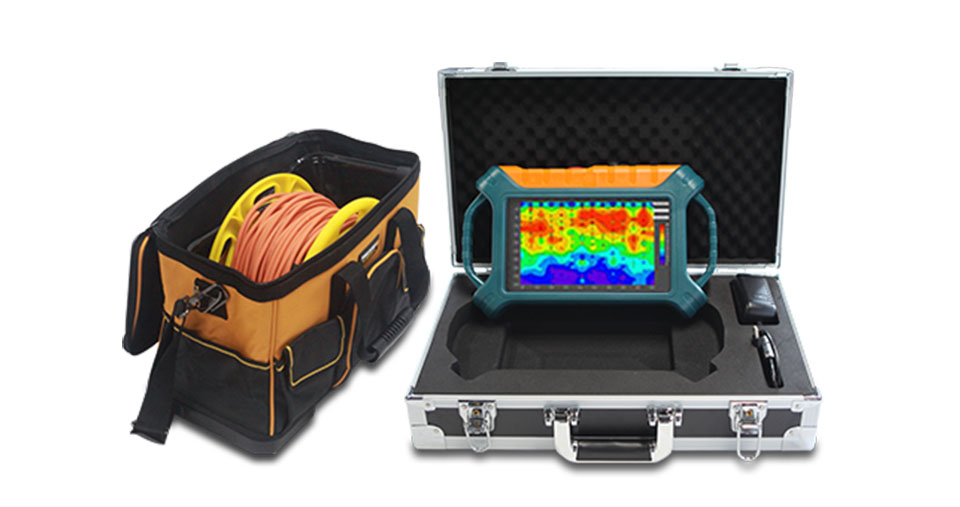
Technology Upgrades & Equipment Innovation
1. Deep Integration of ERT and TEM Methods:
Focus: We need to further optimize the acquisition systems to increase data speed and penetration depth, especially by improving noise resistance in complex geological settings. The goal is real-time joint inversion of Electrical Resistivity Tomography (ERT) and Transient Electromagnetic (TEM) data. This leverages ERT’s vertical resolution and TEM’s lateral continuity to pinpoint the structure and existence of aquifers with higher accuracy.
2. The Rise of Drone-Carried Payloads (UAVs):
Focus: Develop lightweight, highly sensitive geophysical sensors that can be mounted on drones. This will allow for rapid initial surveys over large areas, dramatically boosting exploration efficiency and reducing the cost and difficulty associated with traditional ground surveys.
3. Introducing Seismic and Micro-Seismic Technology:
Focus: We’re exploring the use of shallow reflection seismics or microtremor surveys. These can precisely map out key groundwater flow paths and enrichment zones, such as karst fissures and fault fracture belts, providing a more reliable basis for drill site depth and structural context.

Data Processing & Smart Analytics
1. Building Multi-Source Data Fusion Platforms:
Focus: Consolidate remote sensing images, geological drill logs, hydrological observations, meteorological data, and geophysical survey data. We need to build a unified 3D groundwater information model and use GIS platforms for visual management and spatial analysis.
2. The Application of AI and Machine Learning (ML):
Focus: Develop AI-based automatic interpretation models for geophysical data. By feeding in large datasets of successful and unsuccessful case studies, we can train models to automatically identify electrical, magnetic, and other anomaly characteristics of aquifers. This will lead to smart predictions of aquifer distribution, reducing reliance on human experience and minimizing errors.
3. Real-Time Data Processing and Quality Control:
Focus: Upgrade field acquisition gear with preliminary data processing and quality assessment capabilities. This allows us to monitor and adjust data quality in real-time during the field survey, ensuring data reliability right from the start.

Deepening Applications & Standardized Project Management
1. Integration with Precision Agriculture and Smart Water Management:
Focus: Combine prospecting results with irrigation needs and regional water capacity. The goal is to guide sustainable groundwater extraction—for example, providing farmers or agricultural parks in arid and semi-arid regions with precise drilling locations and recommended pumping volumes.
2. Emergency Water Supply & Drought Preparedness:
Focus: Establish rapid-response teams and equipment, utilizing highly mobile detection technologies (like UAV payloads or portable devices). This enables the quick location of temporary or emergency water sources when disasters or droughts strike.
3. Standardizing Project Life Cycle Management:
Focus: Establish stricter exploration workflows and quality control standards. This involves creating a closed-loop management system, from initial data collection and fieldwork to final data reports and successful drilling verification, ensuring the accuracy and traceability of all results.

Conclusion:
The core of water prospecting work in 2026 is “Data-Driven, Smart-Assisted, and Precision-Located.” By integrating multi-disciplinary technologies—geophysics, remote sensing, and hydrology—and leveraging AI/ML for efficient analysis, the ultimate goal is to achieve more reliable and sustainable groundwater resource development and utilization.
Contact Us – Guangzhou International Technology
Click the Link to Contact Us Immediately and Learn More About Water Detectors.


